Artist
Back to all ArtistsThan Htay
Lives and works at Yangon, Myanmar
1958

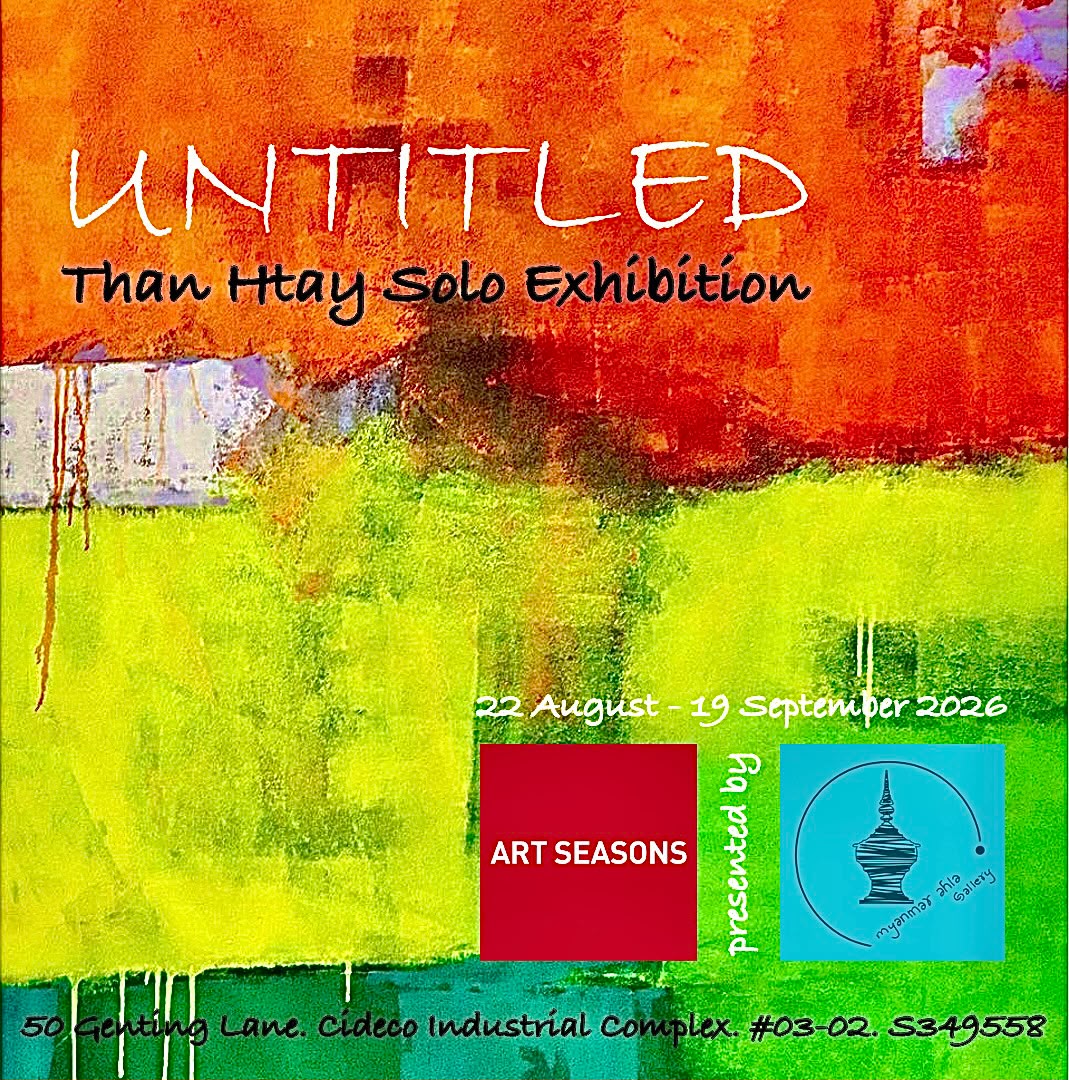
Among the generation of contemporary Myanmar artists shaped by migration and transnational experience, Than Htay (b. 1958) occupies a distinctive position. After relocating to Chiba, Japan, in 1990, he developed his artistic practice over more than a decade before briefly returning to Myanmar in 2006. He currently resides in Chiang Mai, Thailand. His artistic trajectory reflects the experiences of many Southeast Asian artists whose creative identities have been formed through displacement and cross-cultural encounters rather than geographical permanence. A self-taught painter, Than Htay began painting at an early age and gradually developed a distinctive visual language that combines imagination, emotional expression, and technical experimentation. He is particularly recognised for his vibrant use of colour, expressive compositions, and innovative painting techniques. Following the political upheaval of 1988 in Myanmar, Than Htay established his career in Japan, where his artistic achievements gained international recognition. During this period, he received several prestigious awards, including the Fuji TV Award and a Mayor's Award at Japanese art competitions. In 2013, he was awarded the Best Painting Prize at the Tun Foundation Bank Art Awards in Myanmar, further consolidating his reputation as one of the country's leading contemporary artists. A modernist in both vision and practice, Than Htay has held eighteen solo exhibitions and participated in more than fifty group exhibitions in Myanmar and internationally. Throughout his career, he has explored a diverse range of subjects, including luminous landscapes, figurative compositions, abstract works, and historically inspired series. His paintings are represented in numerous public and private collections across Myanmar and abroad, including Japan, China, South Korea, Singapore, France, and the United States. As a member of the Artist Friendship Association of Asia in Japan, Than Htay continues to produce works distinguished by their dynamic energy, richly layered surfaces, and compelling visual narratives. His sustained contribution to the development of contemporary Myanmar art has earned him critical recognition and an international reputation that extends well beyond his homeland.